Horn "Cuivre" controller

edit:
All I want is a "Cuivre" controller/parameter/mode.
In the first paragraph of the horn's site description, you detail all the complex parameters altered when playing the horn, and that your instrument is a playable and intuitive compromise of all these parameters, within the limitations of a virtual instrument.
While I appreciate the strive for intuitiveness very much, I would like to have controll of the parameters when needed, specifically one parameter which I hope I can explain.
The high notes of the horn (~Higest D through G) at high dynamics very distictly lack an airy "buzz", which isn't the existing 'buzz' parameter. Cuivre , if I'm not mistaken.
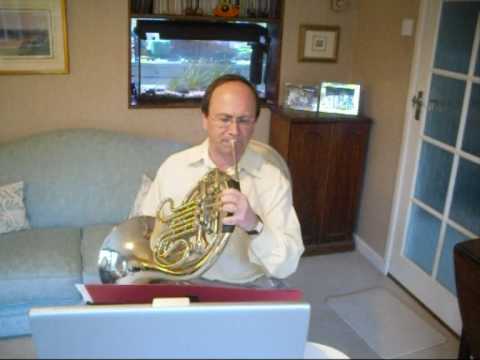
A very good example of the sound I'm missing and can't replicate with the horn is in this video, the high "buzz" when he plays the high E (2:02 and 4:28)
I have read the "science" section of 'The Trombone' very carefully, and will this may be the cause of the difference in sound ("lacking in the higher frequencies" etc') I still believe this parameter can be located.
All I want is a "Cuivre" controller/parameter/mode.
In the first paragraph of the horn's site description, you detail all the complex parameters altered when playing the horn, and that your instrument is a playable and intuitive compromise of all these parameters, within the limitations of a virtual instrument.
While I appreciate the strive for intuitiveness very much, I would like to have controll of the parameters when needed, specifically one parameter which I hope I can explain.
The high notes of the horn (~Higest D through G) at high dynamics very distictly lack an airy "buzz", which isn't the existing 'buzz' parameter. Cuivre , if I'm not mistaken.
A very good example of the sound I'm missing and can't replicate with the horn is in this video, the high "buzz" when he plays the high E (2:02 and 4:28)
I have read the "science" section of 'The Trombone' very carefully, and will this may be the cause of the difference in sound ("lacking in the higher frequencies" etc') I still believe this parameter can be located.
Comments
Also called "stopped Horn", I was kind of expecting that to be available. That being said, I congratulate to this release which is as complete as any! No traditional sample library of horn and tuba can compete!
I kind of expected a "stopped option" in the mutes area. You might be right, a controller might be more fitting. With my limited knowledge of the instrument I am not sure, if this really applies, as the technique of putting the hand into the bell is also used for tuning and sound shaping by horn players. Yet, there is a dedicated articulation of playing "stopped" indicated by + in the score. Maybe there is a way of getting that sound with the existing controllers. I am afraid I didn't have enough time to dig deep enough into this versatile instrument to find out ... Hence, a comment by Giorgio, Peter, or any other part of the team would be most appreciated by me!
Cuivre has nothing to do with stopping. One can either play Cuivre stopped, or raise the bell of the instrument. And this sound is missing, at least for me, in the set.
The sound I'm looking for is composed of two elements: the lip buzz, and the bell's 'buzz'.
For the lip buzz, one could record a sample of lip buzz as an sampled element that plays automatically with the playing note. Since the lip buzz is a pitch-dependent element, maybe it can be modeled into the main sample. (detect the way it influences the sound, and modulate the main sample accordingly [sample modling :P])
The bell buzz: The more distinct characteristic of this sound however, is theor the bell buzz. For this I had an idea, probably no news to you guys though: one could record an impulse response by playing sinewave sweep very very close to a horn's bell, in a way that excites the bell and makes it vibrate, Then use this sample as a convolution reverb effect. (maybe placing the speaker on the bell directly with some minimal padding, one layer of felt possibly*)
An important note: try to somehow preserve only the "buzz" and not the pseudo-ambience resulting from the sine sweep, maybe EQing (or shifting the formant etc') the IR before using it would do the trick.
If I'm talking nonsense, then I'm sorry. But this may be an improvement to the current "early reflections" since it is supposed to mimic the vibration of the instrument- and the most characteristic vibration of a brass instrument is, to my opinion, the 'buzz' in the higher ferqencies.
If accoplished succesfully, this effect could be implemented on all the brass instruments as a automatable CC# parameter, to compliment the "early reflections" CC.
*To increase the 'buzz' effect in the IR, one could time the sine sweep so it lingers in the frequencies that vibrate the horn the most, altough this might be incorrect as I don't fully understand how Convolution reverb works.
Before replying to your last post, we need to clarify the following.
You wrote: "The high notes of the horn (~Highest D through G) at high dynamics very distictly lack an airy "buzz", which isn't the existing 'buzz' parameter. Cuivre , if I'm not mistaken. A very good example of the sound I'm missing and can't replicate with the horn..."
Hence, your subsequent proposals are aimed at solving an issue concerning these highest notes, right?
Thanks,
Giorgio & Peter
Yes! the problem is only with that high register, no matter what mute\stop\controller settings combination I tried. The lower registers sounds completely outhentic. Immensly impressive stuff.
(On that note: Can't wait for the day you'll produce ensamble, even solo strings... making just about everything esle obsolete XD)
Thanks,
Dormusic
We must recall that our virtual instruments are, after all, sample-based. This means that the timbral properties are, to some extent, conditioned by the recorded material. And all samples are not created equal.
One would probably get better results by reworking the samples, rather than introducing complex manipulations at the instrument level. This is particularly true if the number of "less than optimal" samples reduces to just five or less at the highest dynamics, belonging, by the way, to a range which, according to many teachers and orchestration experts, should be best avoided when writing a score. Several sources advice not to exceed C4.
We did appreciate your constructive criticism, though. We will try our best to further improve our instruments even in this very demanding range. If feasible, it will be a subject of a future update.
Thanks for your appreciation,
Giorgio & Peter
(btw, if it's of any interest, I changed my mind : the D natural is also a bit problematic).